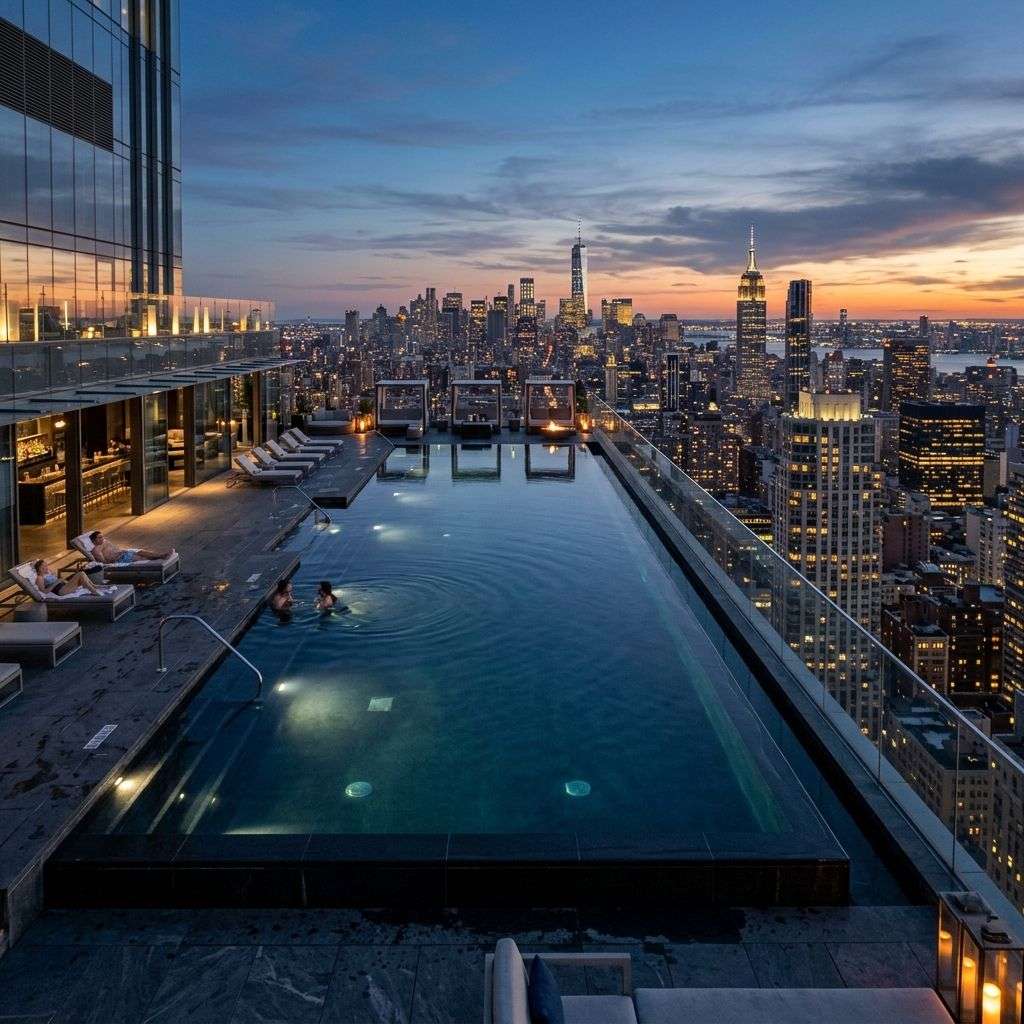
Mixed-use towers — residential above commercial podium, or resort apartments above back-of-house plant — face a predictable acoustic challenge. Pool filtration pumps run 18-24 hours per day. Without engineered isolation, the low-frequency vibration transmits through structural slab and shell walls into living spaces below. For body corporate sale, resale, and hospitality operators, the cost of resolving it post-completion is often 5-10 times the cost of engineering it correctly from the start.
The Physics of Transfer
Pool plant noise travels via two paths: airborne (through the plant room walls and ceiling) and structure-borne (through the slab directly into occupied spaces below). Structure-borne is the harder problem — it requires mechanical isolation of every vibrating component.
VSD (variable speed drive) pumps operating at sub-optimal frequencies can actually worsen the problem by exciting structural resonances in the slab, creating detectable tonal noise even if overall dB levels appear low.
The Three-Layer Isolation Method
Our standard commercial specification uses three independent isolation layers at every plant mount point:
- Layer 1 (base): Neoprene vibration pad — absorbs high-frequency components
- Layer 2 (intermediate): Epoxy-grouted intermediate plate — thermal expansion tolerance
- Layer 3 (top): Spring-isolated mount with tuned stiffness — attenuates low-frequency transmission
Plant Room Envelope Engineering
Beyond pump isolation, the plant room itself needs acoustic treatment: absorptive ceiling panels, isolated stud walls, heavy-gauge door seals, and independently-mounted service penetrations. Standard building construction is inadequate — the plant room is effectively an industrial enclosure within a residential building.
We specify a 60dB sound-reduction design target for the plant room envelope, measured at adjoining occupied spaces.
Commissioning Verification
All of this must be verified at commissioning, under actual operating conditions at full bather-load water demand. We conduct sound-level testing at three points: directly adjacent to the plant room wall, in the occupied space below, and at any common wall with neighbouring tenancies. Results are documented in the commissioning handover pack.
Conclusion
Acoustic isolation is structural work, not a finishing treatment. Building it into the slab detailing and plant room enclosure during Stage 02 prevents the most expensive class of post-completion rework.