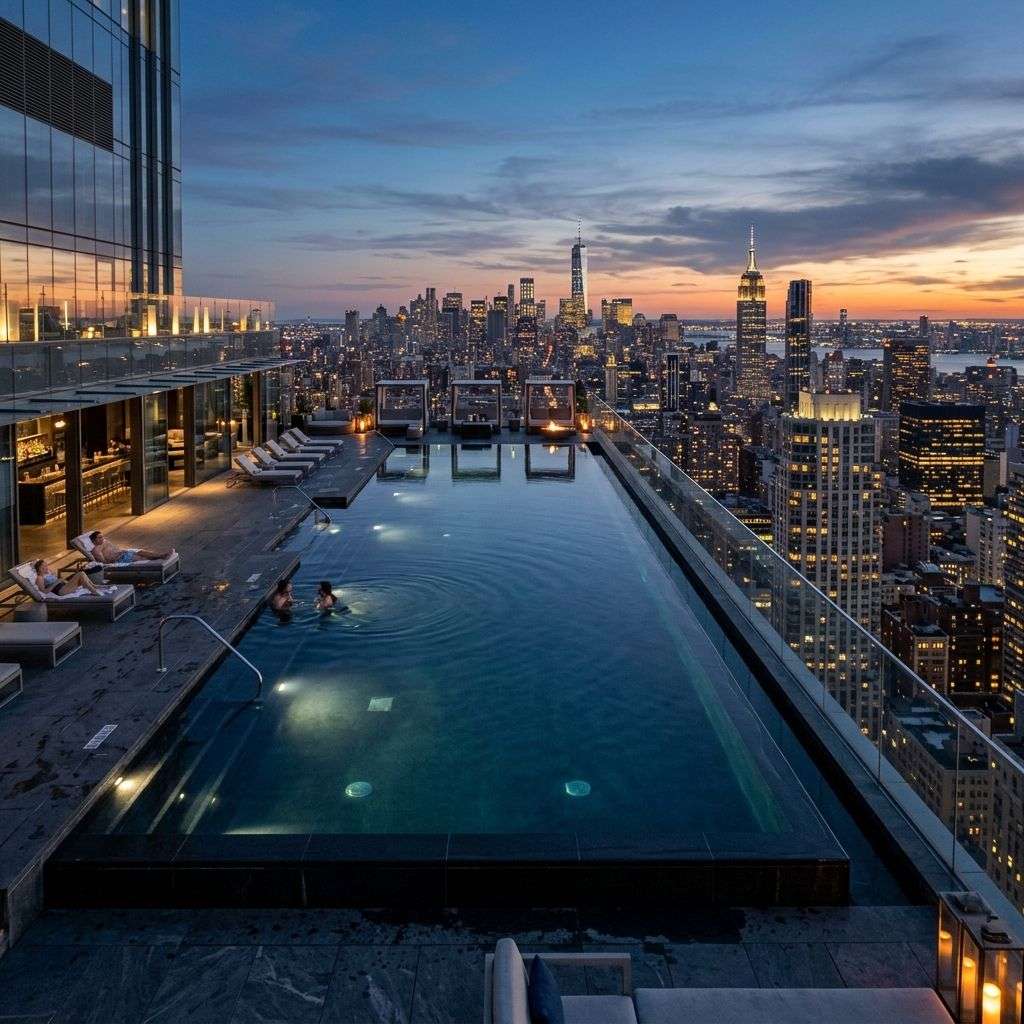
Over 20 years we've been called in to assess failures on commercial pools we didn't build — typically for operators, insurers, or new owners inheriting problem assets. The failures cluster around five predictable causes, and all of them are preventable with appropriate engineering discipline. If you're evaluating a contractor or inheriting an asset, these are the five issues to investigate.
1. Inadequate Geotechnical Investigation
The most expensive failure category we see is pools built on reactive, saturated, or filled ground without proper geotechnical characterisation. The pool shell cracks within 12-24 months as seasonal ground movement stresses the structure.
Prevention: insist on a proper geotechnical report at feasibility, with soil classification (AS 2870) and water table assessment. Pier-and-beam foundations are standard for reactive ground.
2. Under-Sized Plant and Filtration
The second category involves commercial pools commissioned with filtration capacity sized for residential bather loads. These fail at first summer season peak usage — water clarity drops, chlorine demand spikes, and filter backwash cycles become constant.
Prevention: validate plant sizing against AS 2610 / AS 1926 commercial bather load calculations, not residential turnover assumptions. Insist on 48-hour load testing at commissioning.
3. Waterproofing Shortcuts
Commercial pools require engineered waterproofing membranes (polyurethane or cementitious fully-bonded systems), not residential epoxy coatings. We've assessed pools where residential-grade coatings delaminate within 18 months, allowing water behind tile and into structural concrete.
Prevention: specify and verify commercial-grade membrane systems. Review waterproofing specifications against project scale and bather load. Confirm the membrane warranty extends at least 10 years.
4. Poor Tile Installation and Grouting
Tile failures are the most visible commercial pool problem — drummy tiles, failed grout, and substrate exposure. Root causes: inadequate substrate preparation, wrong grout specification (cement instead of epoxy for commercial pools), and incorrect joint spacing.
Prevention: specify epoxy grout for all commercial applications. Verify substrate preparation before tile installation. Confirm specialist tile subcontractor has commercial pool experience.
5. Cold-Joint Structural Cracking
Pool shells poured in multiple stages (rather than monolithically) develop cold joints — weak planes where subsequent cracking concentrates. At commercial scale this cracking can penetrate the structural shell.
Prevention: insist on monolithic shotcrete pour for commercial pool shells. Verify the contractor has the crew capacity for continuous pour — often requires dual-shift operation for larger vessels.
Conclusion
Every one of these failures is preventable with appropriate engineering discipline at design and verification at construction. Our commercial aquatic construction service applies this discipline as standard — our 20-year portfolio has zero structural rework claims at DLP.