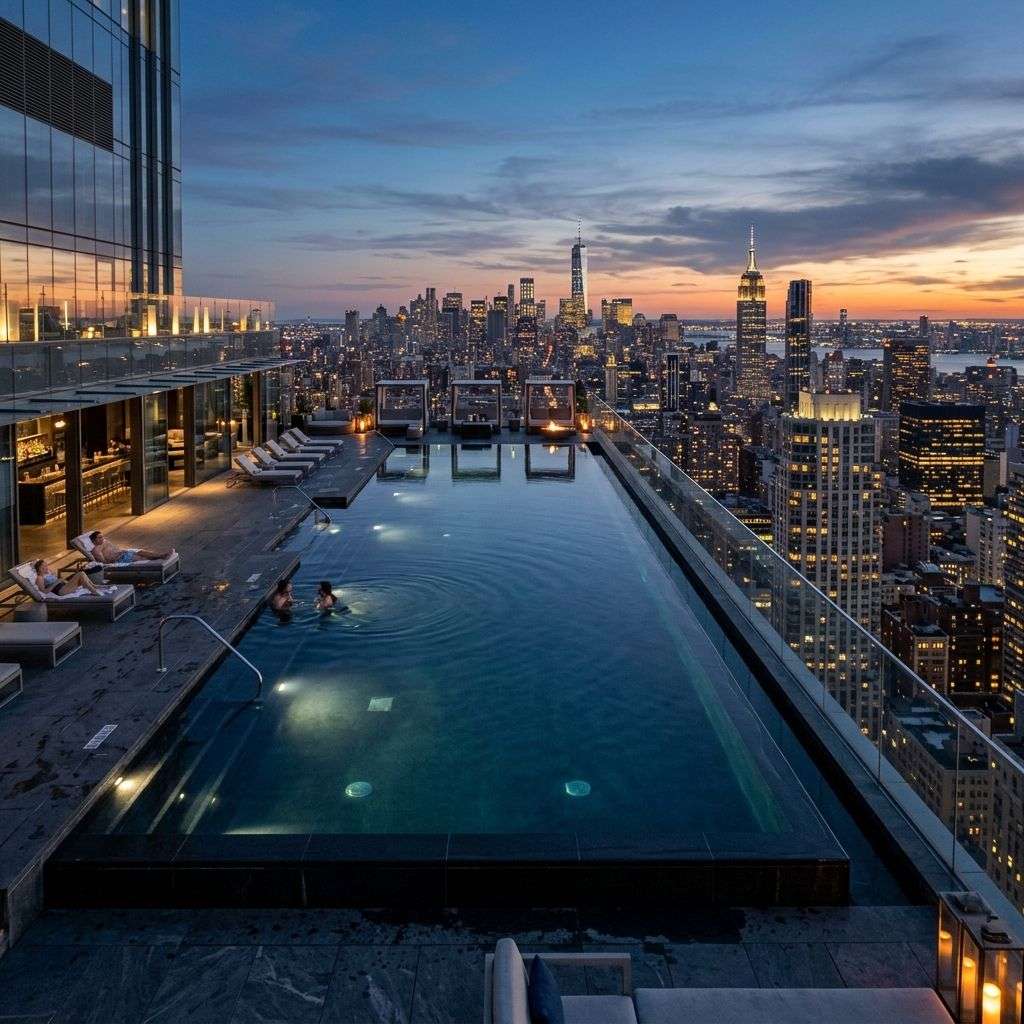
For hotel operators and asset managers evaluating aquatic capital expenditure, framing matters. A pool is not a line item under 'guest amenities' — it is direct revenue infrastructure that influences booking rate, average daily rate (ADR), guest tenure, and repeat patronage. Premium aquatic builds consistently deliver measurable occupancy and ADR lift that justify the capital premium.
The Direct Revenue Effect
Industry data from STR and AU hospitality consultancies consistently shows that hotels offering what guests categorise as 'premium pool experiences' capture 12-18% ADR premium and 8-15% occupancy lift over peer properties with basic aquatic amenities. For a 150-room 4-5 star property, that translates to $800K – 1.5M additional annual RevPAR.
Over a 15-year pool asset life, the cumulative revenue differential dramatically exceeds the capital premium for premium construction.
Guest Review Multiplier
Pool experience appears in approximately 60% of 4-5 star hotel reviews. Negative pool reviews — cold water, poor water quality, overcrowding, broken plant — drive disproportionate rating damage. A single sustained negative pool review cluster can drag overall rating 0.3-0.5 stars, affecting Tripadvisor and Booking.com placement.
Conversely, consistently positive pool reviews amplify positive rating momentum and drive organic booking inquiry.
What 'Premium' Actually Means
From our sector experience, guests define premium pool experience around these factors:
- Water clarity and cleanliness (no chlorine smell, no debris, precise temperature)
- Adequate capacity (no overcrowding during peak times)
- Architectural context (framing views, dusk lighting)
- Supporting amenities (swim-up bar, separate spa, kids zone with own circulation)
- Reliability (no unplanned closures for plant issues)
Capital Premium Breakdown
A commercial hotel pool executed to premium specification typically carries 25-35% capital premium over budget construction. The premium buys: better water treatment (reliability), better finishes (review-grade aesthetics), more capacity (occupancy growth buffer), and better plant (lower operational failures). Over 15-year asset life, operational savings typically offset 40-60% of the premium independent of revenue gains.
Conclusion
Our hotel pools service treats aquatic construction as revenue infrastructure — every feasibility memo includes a simple revenue-lift model tailored to the hotel's segment and occupancy profile.