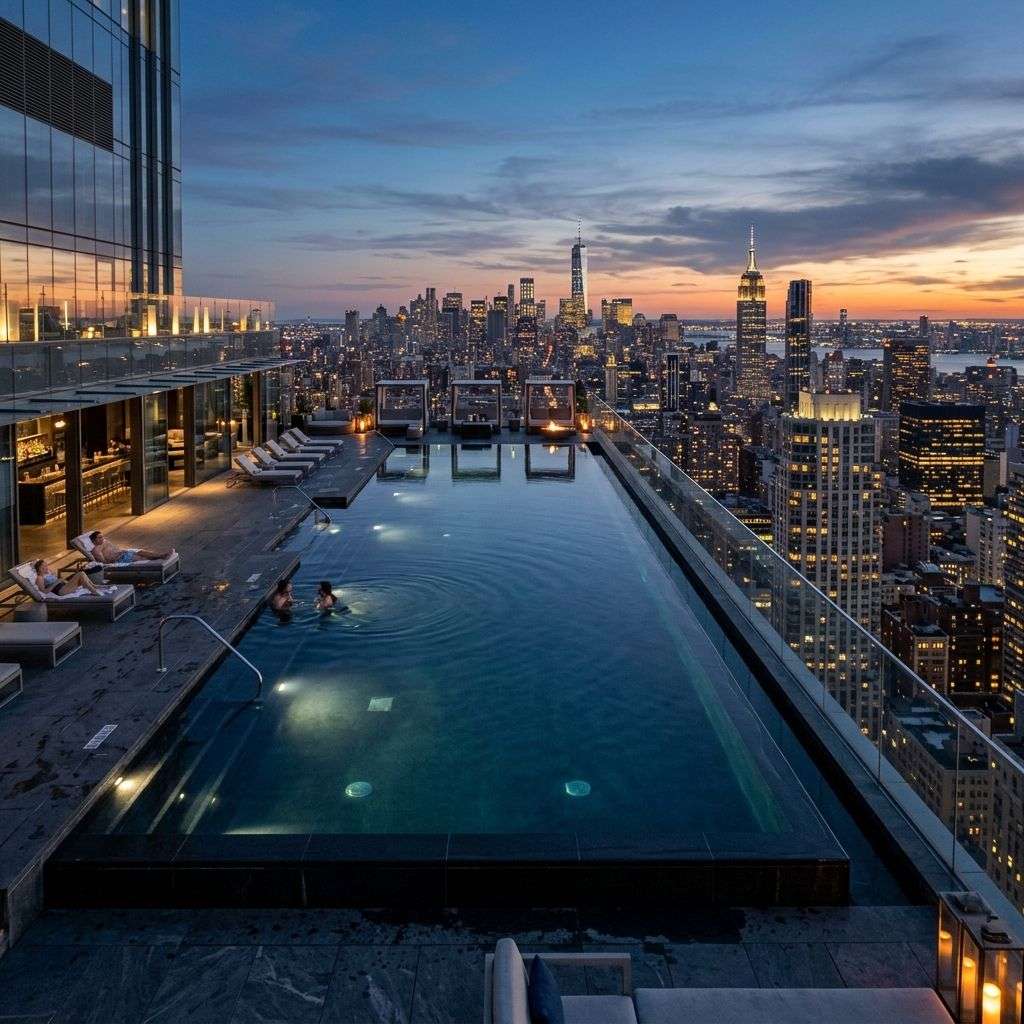
Between Coffs Harbour and Port Macquarie, much of the commercial aquatic stock is not new. Holiday park and resort pools built for an earlier generation of guest — a single rectangular vessel, a small toddler pool, plant tucked into a shed — are now expected to win bookings, meet current accessibility expectations and survive salt air for another twenty years. Upgrading one is a different job from building fresh, and the difference is mostly about timing, regulation and what has to stay open while the work happens.
The season sets the programme
A holiday park pool earns its keep over the summer school holidays and at Easter. Closing it then costs bookings and reviews, so the construction window is usually the cooler months, and the programme is built backwards from the date the pool must reopen rather than forwards from a start date.
That changes how the work is staged. Demolition, excavation and shell work go first, while there is still room to absorb weather; plant, finishes and commissioning are sequenced so that any slip lands in a buffer rather than in the Christmas period. Where a park has more than one pool, keeping one operating while the other is rebuilt is often worth more to the operator than a shorter overall programme.
A guest pool is a public pool in NSW
Under the NSW Public Health Act 2010, a pool provided at a hotel, motel, guest house, holiday units or a similar facility for the use of guests is a public swimming pool. The occupier must notify the local council of the pool's existence and comply with the operating requirements in the Public Health Regulation 2022, and NSW Health's advisory guidance expects disinfection and pH to be automatically controlled rather than hand-dosed. The Act's definition of a swimming pool also takes in water slides and other recreational aquatic structures.
An upgrade is the moment to fix what the original plant could never do — undersized filtration, manual dosing, no continuous monitoring — because retrofitting it later means another closure. We size turnover and treatment for the realistic peak, and at a family holiday park in January the peak is nothing like the average day.
Salt air and humidity decide the plant specification
The coastal strip from Coffs Harbour to Port Macquarie combines salt-laden air with high humidity for much of the year. Older plant rooms — often a ventilated shed close to the water — show it first: corroded pump housings, failed fixings, and switchgear that trips in wet weather. Replacing like for like simply repeats the problem on the same timeline.
We specify plant and fixings for the exposure: titanium or marine-grade components where chlorides reach them, sealed and properly ventilated plant enclosures, and a layout that keeps chemical storage separated and reachable for deliveries without crossing guest areas. The upgrade budget does more good there than on a finish that looks new for a season.
Heating is where an upgrade most often changes the operating budget. A heated pool or spa stretches the useful season into the cooler months that coastal parks market to off-peak travellers, but it also turns the plant room into an energy decision. Heat pumps sized for the real exposure, covers used outside opening hours, and short pipe runs between plant and vessel are far cheaper to design in than to argue about after the first winter power bill.
What guests now expect — and what the standards require
Operators upgrading for bookings usually want more than a new shell: shallow play zones, water play features, a heated or spa component for the shoulder season, and proper shade. Each adds its own compliance layer, and accessibility runs across all of them.
- Accessible entry and circulation to AS 1428 and the DDA, planned into the layout rather than added later as a hoist
- Safety barriers and gates to AS 1926.1, including around any new spa
- Spa vessels designed to AS 2610, with their own treatment and turnover
- Water play features designed as part of the aquatic system, with drainage, treatment and slip resistance resolved together
Consent, land tenure and mobilisation
Some coastal holiday parks operate on Crown reserves under a reserve manager rather than on freehold land, which adds a landowner's consent step before a development application can be lodged. It runs on the reserve manager's timetable, not the builder's, so it is worth starting early. Coffs Harbour and Port Macquarie-Hastings councils then assess the work under their own controls, and beachfront sites can carry additional coastal hazard mapping.
Coffs Harbour is roughly 400km from our Capalaba base and Port Macquarie closer to 570km. At that distance we stage the work in defined blocks per mobilisation and price travel openly rather than hiding it in a contingency. We hold NSW Fair Trading registration alongside our Queensland licence, so the paperwork is settled before tender.
Conclusion
Upgrading a holiday park or resort pool on the Mid North Coast is mostly a timing and specification problem: fit the work into the off-season, bring treatment up to public pool standard, specify plant for salt air, and get consent moving early. Our single-vessel commercial work typically starts around $500K, and once plans exist we return an engineered quote in seven to fourteen days. Call 1300 924 666 or send the brief through, and we will tell you on the first call what your window realistically allows.